
YCC 2026–2027
Digital Literacy & Ethical AI
MILSET Young Citizens Conferences
Young Citizens Conferences (YCC)
The Young Citizens Conferences (YCC) are designed to empower youth to better understand the world’s major challenges and to explore practical solutions through dialogue, teamwork and real-world perspectives.
In each edition, participants engage with a central theme and work through guided sessions, discussions and collaborative activities that connect science, society, innovation and sustainable development.
YCC 2026–2027
Digital Literacy & Ethical AI
The MILSET YCC invite young people to reflect on how the digital world shapes the way they learn, connect, create, and participate in society. Under the theme Digital Literacy & Ethical AI, participants will explore the opportunities and challenges of living in an age of constant connectivity and artificial intelligence.
This edition empowers youth to examine how AI affects their privacy, mental wellbeing, education, and access to trustworthy information—while sharing ideas for a more responsible, inclusive, and safe digital future.
YCC
Goals and Objectives
Encouraging critical thinking and informed dialogue about current world challenges
Create a space where youth can express their views on the topic;
Engage youth in discussion and debate concerning their future;
Enable youth to discover their personal responsibilities;
Encourage youth to express their concerns about the topic through participation in an open global discussion;
Present the voice of youth through short video presentations which will be posted on the MILSET website and other internet platforms.
YCC
Methodology
Concerns
Introduce participants to the issue. Start by asking them thought-provoking questions about the topic and their recent related observations and experiences. What changes have they noticed? Which changes are having the greatest impact on society? What could be the social consequences of those changes in the near future? Participants can be also shown short videos on the topic, or guest speakers can present various opinions.
Discussion
In small groups, participants discuss ideas, issues and concerns related to the topic from the first part of the conference or from their own experience. Encourage them to identify possible future benefits and risks for each concern.
Actions
Participants explore and list possible actions to solve or reduce the concerns they identified. What should be done to reduce the risks and apply for the benefits in the best possible way? Who should be responsible for accomplishing these actions? What can participants do to have an impact – at home, at school, in their community, and in the world? How should we behave in our everyday life? As teams, participants prepare short presentations or videos to communicate the results of their discussion and their recommendations.
Digital Literacy & Ethical AI
Main Debate Topics
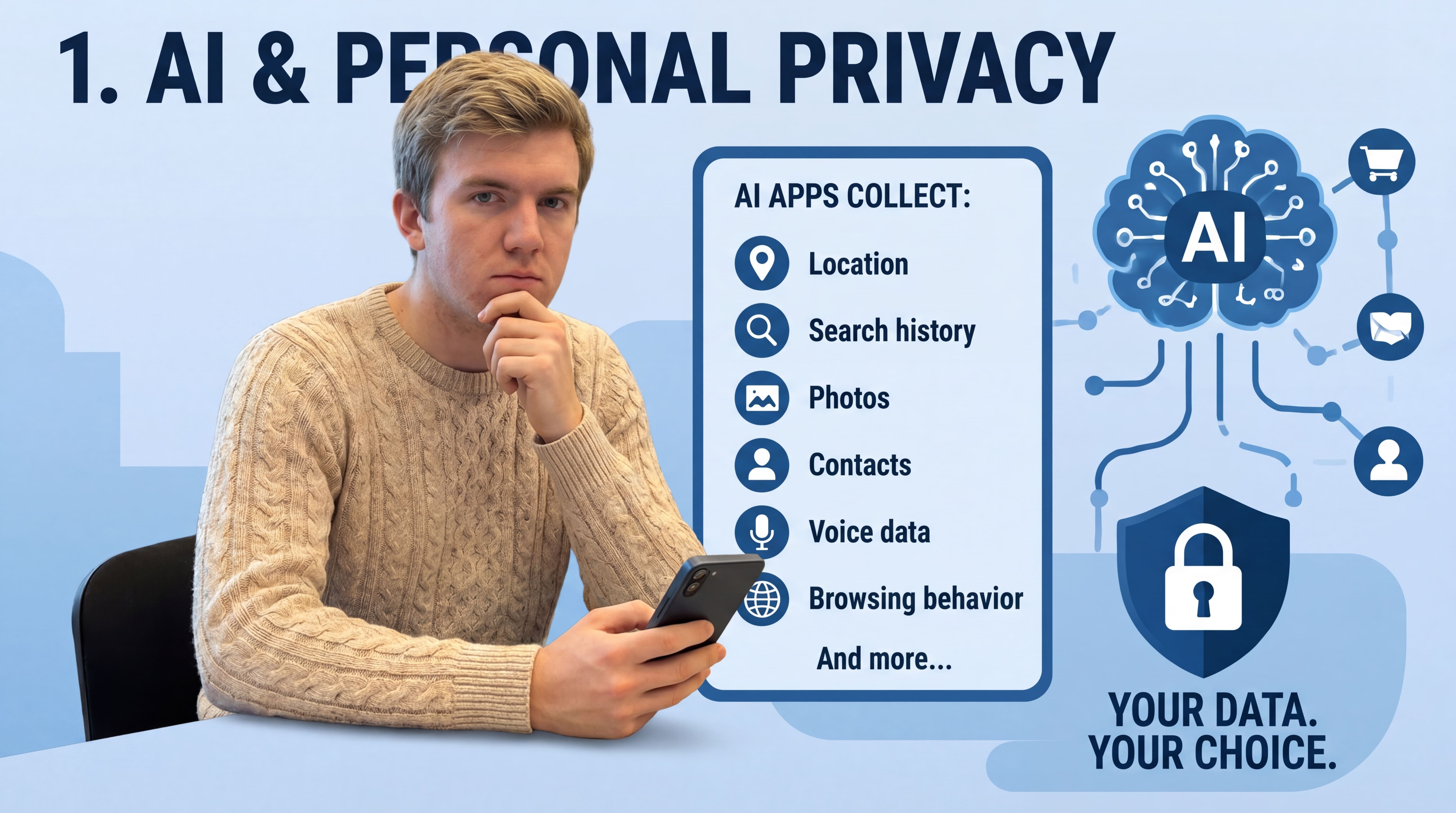
AI & Personal Privacy: How Much Should We Share?
Apps, games, and AI tools collect more data than most people realize. This topic invites participants to question what they share online, how companies use that information, and what privacy means in a world where everything is connected.
Thought-Provoking Questions
- What types of personal data do we share without realizing it?
- When does data collection become too invasive?
- How much should companies be allowed to know about us?
- What are the risks of oversharing online?
- What actions can young people take to protect their privacy?
Pros & Cons Angle
- How does sharing data improve our online experience?
- What do we risk when we prioritize convenience over privacy?
Deep Debate Questions
- Should young people have the right to delete all their online data permanently?
- Is it fair for free apps to use data as a form of “payment”?
- Should parents be allowed to monitor their teens’ online activity for safety?
- Who should control youth data—individuals, governments, or tech companies?
- Should AI analyze private conversations to prevent harmful behavior? (Safety vs. surveillance)
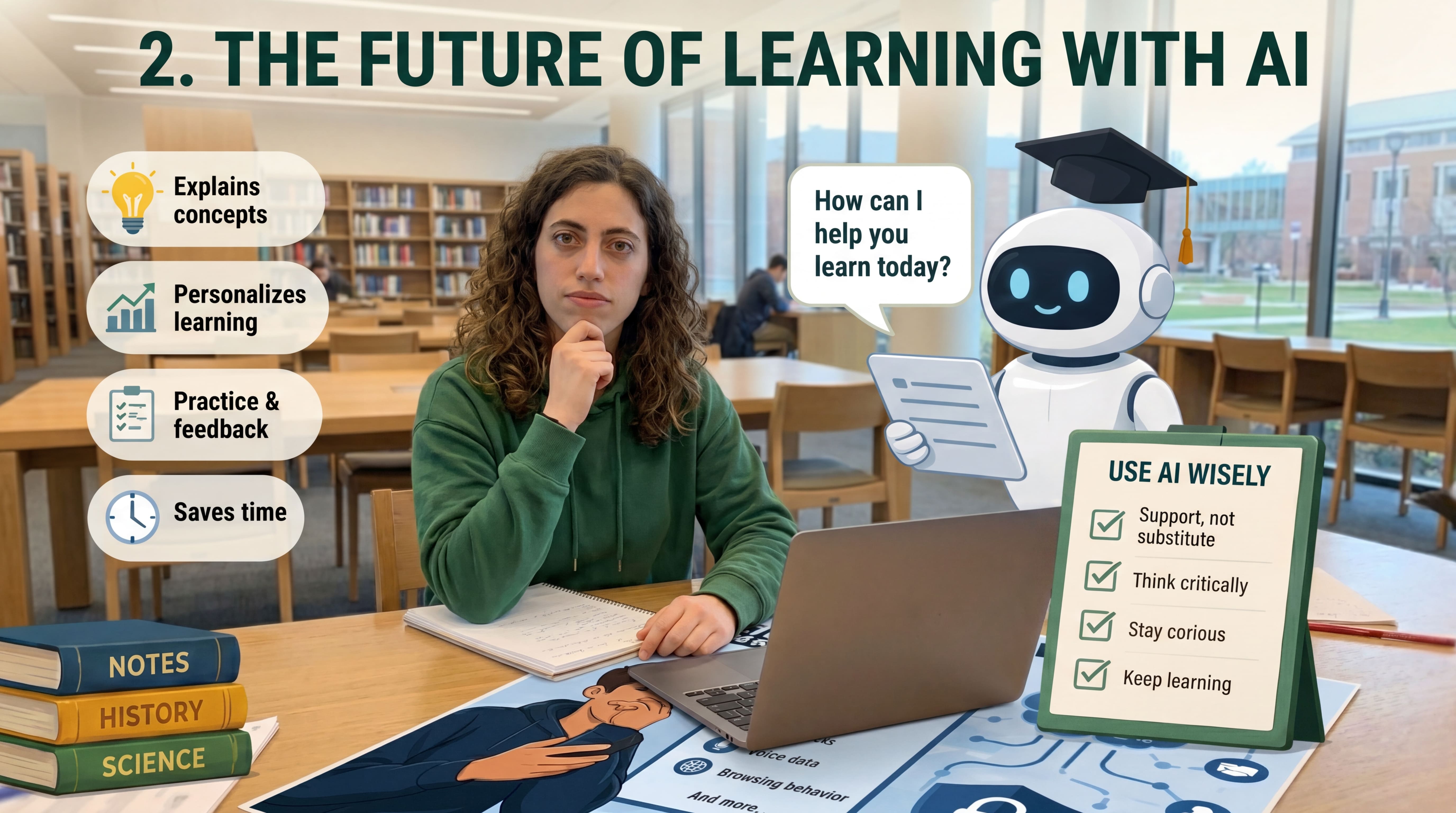
The Future of Learning with AI: Help or Dependency?
From instant explanations to personalized study tools, AI is transforming how young people learn. But how much help is too much? This topic explores the balance between using AI to support learning and developing independent thinking.
Thought-Provoking Questions
- How does AI help you learn better or faster?
- Can AI tools replace teachers or traditional study habits?
- When does support turn into dependency?
- Should schools set limits on AI use?
- What skills might we lose by relying too much on AI?
Pros & Cons Angle
- Does AI help students with different learning styles succeed?
- Is AI weakening creativity and critical thinking?
Deep Debate Questions
- Should schools encourage or restrict AI use for homework?
- Does AI make education more equal or widen existing gaps?
- Is it still “your work” if AI helped you brainstorm or write it?
- Could teachers become too dependent on AI for grading?
- Who teaches better—AI tutors or humans?

Fighting Misinformation: Can We Trust What We See Online?
Deepfakes and AI-generated content spread quickly and can be difficult to detect. This topic challenges youth to question what they consume online, build digital literacy skills, and reflect on their role in stopping misinformation.
Thought-Provoking Questions
- Should we trust AI’s answers—even with references?
- How do you check if an image or video is real?
- Have you ever been misled online? What happened?
- Who is responsible for stopping misinformation—users or platforms?
- How can AI help fight false information?
- What habits make someone a critical digital citizen?
Pros & Cons Angle
- Can AI reliably detect misinformation?
- Does relying on AI to verify information lower personal responsibility?
Deep Debate Questions
- Should platforms remove misleading content automatically?
- Are young people responsible for fact-checking before sharing?
- Can AI generated content ever be positive or educational?
- Should deepfake tools be banned or regulated?
- Does AI make misinformation spread faster—or can it be our best defense?
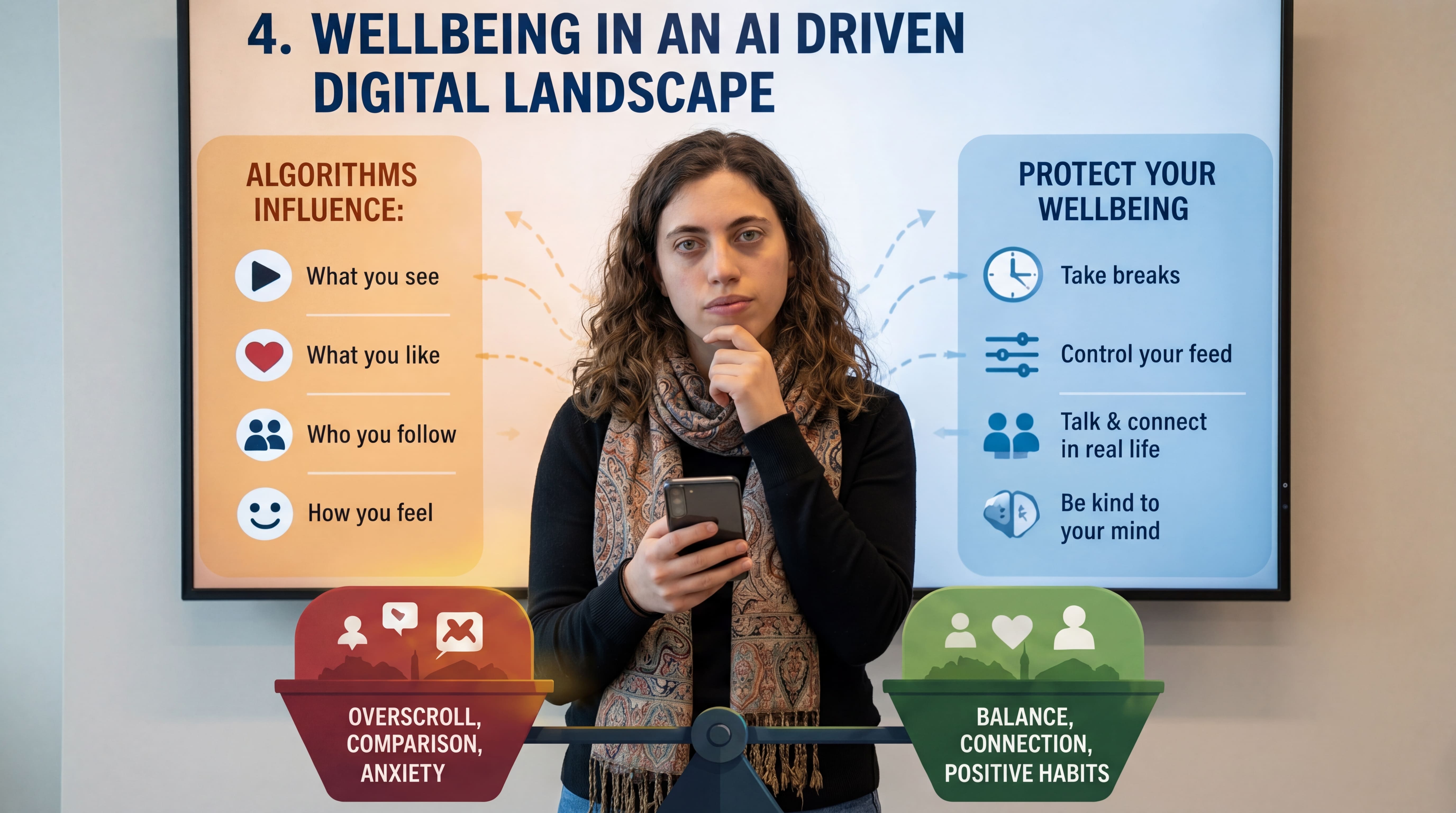
Wellbeing in an AI Driven Digital Landscape
As AI becomes part of social networks, entertainment, school tools, and even health apps, young people face new challenges to their mental and emotional wellbeing. This topic helps participants explore how algorithms influence self-esteem, screen time, online interactions, and the pressure to always stay connected.
Thought-Provoking Questions
- How does AI shape the content you see—and how does that affect your mood or self-image?
- Do recommendation algorithms encourage healthy or unhealthy online habits?
- Is constant connectivity making us feel closer or more isolated?
- How does AI influence friendships and communication?
- Should AI tools be used to monitor or predict mental health risks?
Pros & Cons Angle
- Can AI support wellbeing through personalized coping tools or health apps?
- Do AI-powered platforms encourage comparison, stress, and digital overload?
Deep Debate Questions
- Should social media algorithms be required to prioritize mental wellbeing?
- Is it ethical for AI to track user behavior to predict emotional states?
- Could AI help young people build healthier digital habits—or does it make them more dependent?
- Should teens have the ability to turn off all algorithm based recommendations?
- How can youth balance the benefits of AI with the need for real offline expeiences?
YCC Reports
Submit Your YCC 2026–2027 Report
YCC
Who Can Organize a YCC?
NGOs, universities, schools, and any youth-led group are eligible to organize a MILSET Young Citizens Conference (YCC). According to MILSET guidelines, “youth” refers to individuals between 13 and 25 years of age.
After completing YCC, organizers are invited to submit their conclusions through the official YCC report form to ensure their contributions are included in the global dialogue.

MILSET Young Citizens Conferences
YCC 2026–2027
Digital Literacy & Ethical AI